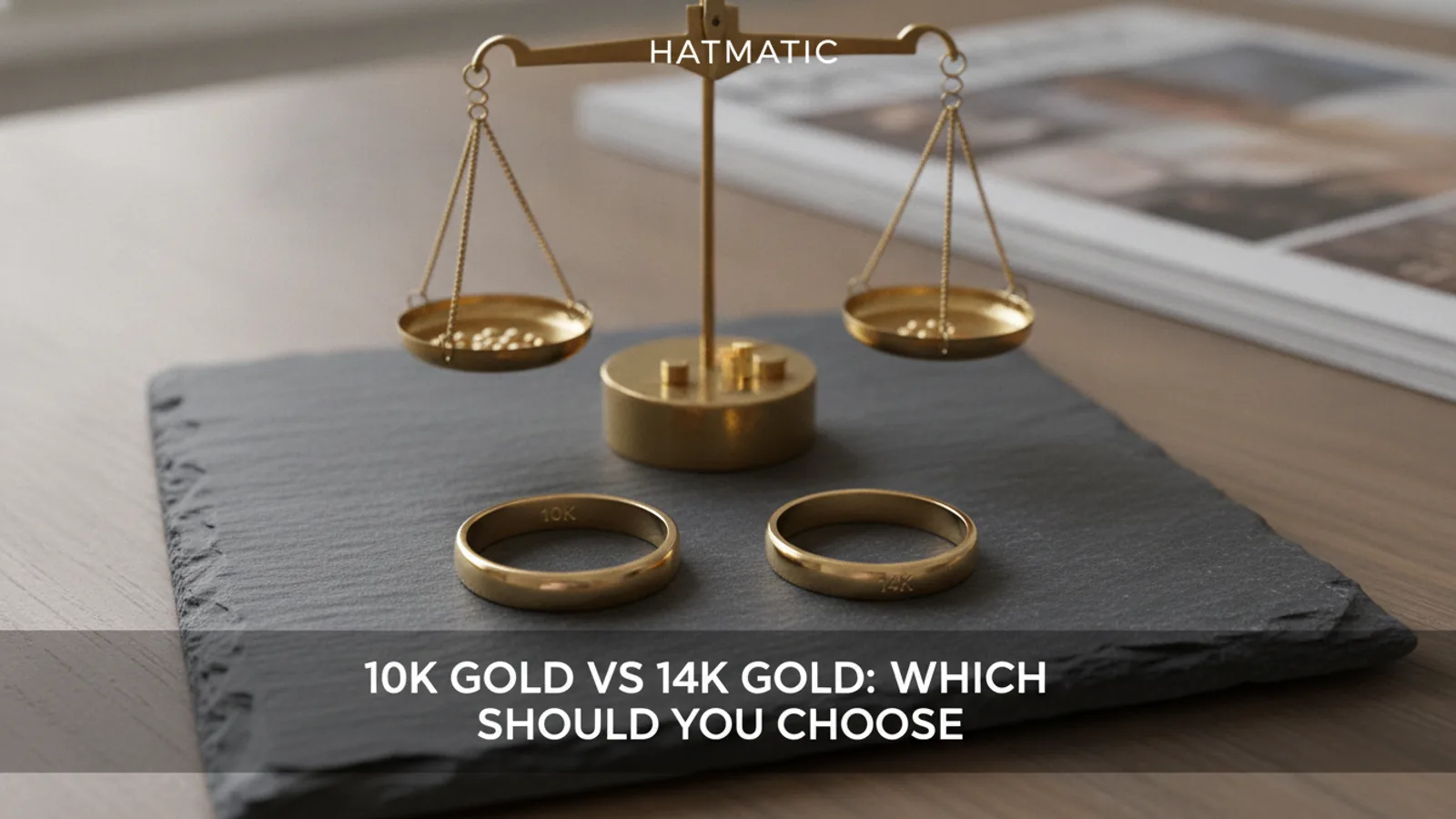
10k vs 14k Gold: Which Should You Choose?
A practical head-to-head comparison of 10k and 14k Gold, covering quick verdict, key differences, category winners, buyer fit, and FAQ.
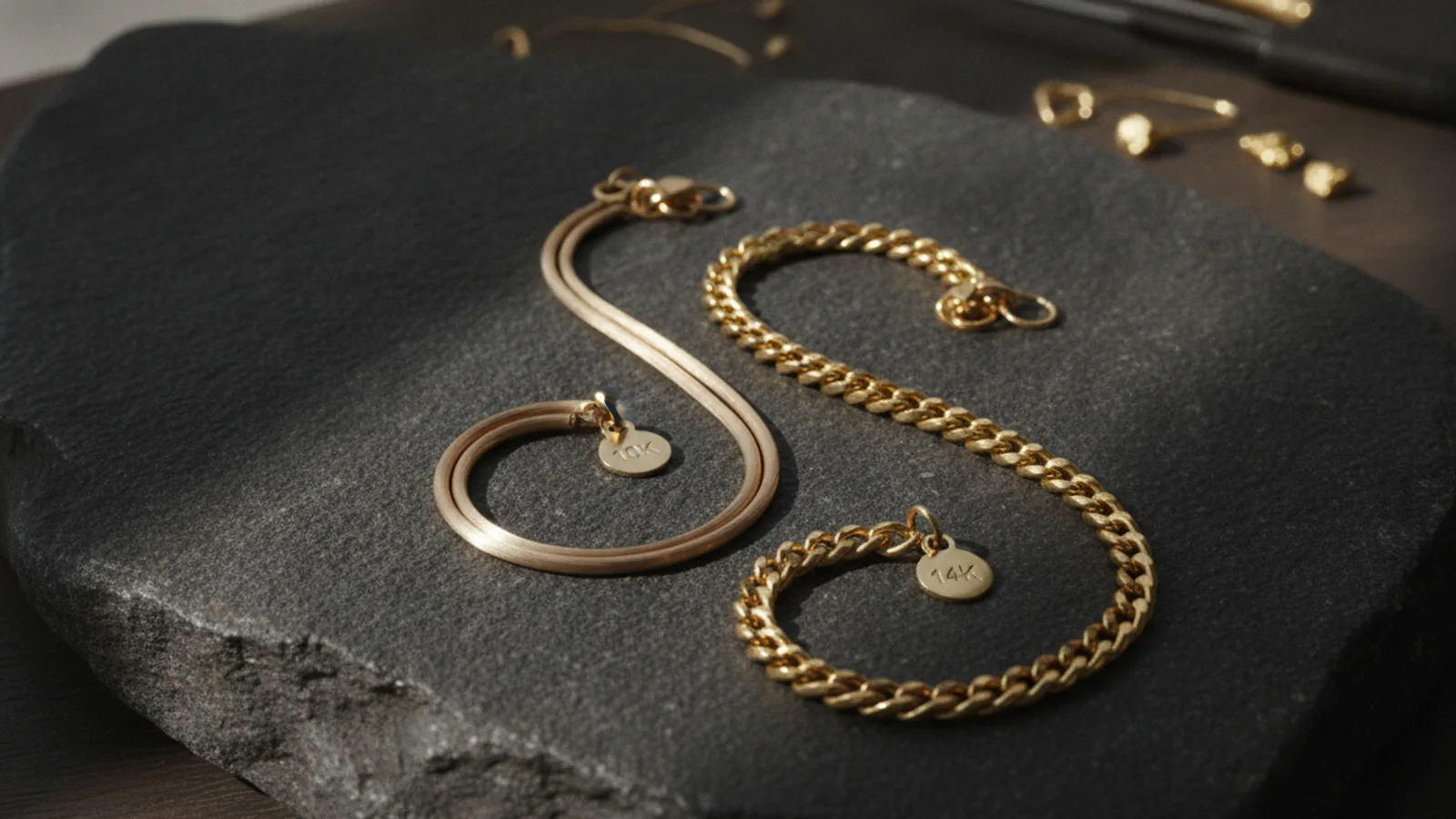
10k vs 14k Gold: Which Should You Choose?
Head-to-head comparison
Overall winner: 14k Gold for its superior balance of purity, colour, and durability.
For most people seeking fine jewellery, especially for significant pieces like engagement or wedding rings, 14k gold is the clear choice. It offers a rich, classic gold colour and higher precious metal value while remaining strong enough for daily wear. Choose 10k gold only if your primary concerns are maximum durability for a very active lifestyle or achieving the lowest possible price point.
This comparison is based on a detailed analysis of the metallurgical properties of gold alloys, established jewellery industry standards, and a synthesis of long-term owner feedback. We've examined the core trade-offs to help you make a confident decision.
When choosing gold jewellery, the number followed by a "k" refers to its karat, a measure of gold purity out of a possible 24 parts. Pure gold (24k) is too soft for most jewellery, so it's mixed with other metals—or alloys—to increase its strength. This guide compares 10k gold (41.7% pure gold) and 14k gold (58.3% pure gold), two of the most common options in the UK. While it may seem like a simple choice between price and purity, the reality involves nuanced differences in durability, colour, weight, and even how they affect your skin. Our analysis shows that while 14k gold is the superior all-rounder, 10k gold has a legitimate place for specific buyers and uses.
Option A
10k
- Best for buyers on a strict budget
- Unmatched durability for active lifestyles
- Paler colour and lower intrinsic value
Option B
14k Gold
- Best for fine jewellery like engagement rings
- The perfect balance of purity and strength
- Higher cost and slightly less scratch-resistant
Head-to-Head Scorecard
10k vs 14k Gold: Key Differences
The fundamental difference between 10k and 14k gold lies in their composition. An item marked "10k" is made of an alloy that is 10 parts pure gold and 14 parts other metals (like silver, copper, zinc, or nickel). This means it is 41.7% pure gold. Conversely, "14k" gold is 14 parts pure gold and 10 parts other metals, making it 58.3% pure gold. This simple ratio dictates every other attribute, creating a series of important trade-offs for you as a buyer.
First is durability. The non-gold metals used in alloys are typically much harder than gold itself. Because 10k gold contains a higher proportion of these hardening alloys, it is measurably tougher and more resistant to scratches and dents than 14k gold. This makes it a practical choice for jewellery that will be exposed to rough conditions.
Second is appearance. The quintessential warm, yellow glow of gold jewellery comes from the gold itself. With nearly 40% more pure gold in its mixture, 14k gold exhibits a noticeably richer and more saturated yellow colour than 10k gold, which can appear paler or more muted in comparison.
Third is the risk of skin irritation. Metal allergies, most commonly to nickel, are a frequent concern. Since 10k gold has a higher concentration of alloy metals, the chance of it containing enough of an allergen to cause a reaction is higher. 14k gold is generally considered a more hypoallergenic option.
Finally, there is the matter of cost and value. The price of a piece of gold jewellery is largely determined by its gold content. With less of the precious metal, 10k gold is significantly more affordable than 14k. However, the higher gold content in 14k means it has a greater intrinsic value, which translates to a better resale or scrap value down the line.
Measurement Winners for 10k vs 14k gold
Measurement
Durability & Daily Wear
The durability of gold jewellery is inversely related to its purity. Pure 24k gold is extremely soft and malleable, making it unsuitable for items intended for daily wear. To counteract this, jewellers mix it with stronger metals like copper, silver, zinc, and palladium to create a tougher alloy. The hardness of the final product depends directly on the ratio of pure gold to these other metals.
10k gold is composed of 41.7% gold and 58.3% alloy metals. This high percentage of strengthening agents makes it the most durable type of gold alloy commonly used in fine jewellery. It is highly resistant to the scratches, scuffs, and dents that can result from everyday activities, from typing on a keyboard to accidentally knocking your hand against a countertop. This resilience makes it an excellent choice for items that endure constant contact, such as rings and bracelets, especially for people with physically demanding jobs or very active lifestyles.
14k gold, with 58.3% gold and 41.7% alloy, is still very durable and represents the industry's benchmark for a reason. It is perfectly capable of withstanding daily wear for decades with proper care. However, it is objectively softer than 10k gold. Over many years, a 14k gold ring is more likely to show a network of fine scratches and may be more susceptible to deep gouges or bending from a significant impact. While it is more than durable enough for most people, those who prioritise maximum toughness above all else will find 10k gold superior.
Measurement
Purity & Appearance
The defining characteristic and primary appeal of gold is its unique colour and lustre. The intensity of this appearance is directly tied to the purity of the gold in the alloy. While alloys are necessary for durability, they also dilute the metal's natural hue.
With 58.3% pure gold, 14k gold possesses a rich, warm yellow tone that is widely recognised as the standard for fine jewellery. It strikes a balance, offering a deep and saturated colour that is visibly premium without the intense, almost orange hue of higher-karat golds like 18k or 22k. When you picture a classic gold wedding band or engagement ring, you are most likely picturing the colour of 14k gold. This aesthetic quality is its main advantage and the primary reason for its popularity.
In contrast, 10k gold contains less than 50% pure gold. The large proportion of other metals, such as silver or zinc, visibly lightens the alloy, resulting in a paler, more subtle shade of yellow. While this is a matter of personal preference—and some may even favour its less ostentatious look—it does not have the same classic, rich appearance as 14k gold. When placed side-by-side, the difference is clear, with the 14k piece looking more vibrant and traditionally "golden." For white gold or rose gold, this difference is less pronounced as the colour is primarily determined by the alloys and plating (like rhodium for white gold), but for classic yellow gold, the purity level is paramount to the final look.
Measurement
Skin Sensitivity & Comfort
For many jewellery wearers, comfort isn't just about fit; it's about avoiding allergic reactions. Skin sensitivity to certain metals is a common issue, with nickel being the most frequent culprit. Allergic contact dermatitis can cause redness, itching, and rashes, making a piece of jewellery unwearable. The likelihood of a reaction is linked to the concentration of allergenic metals in the alloy.
Pure gold is virtually inert and does not cause allergic reactions. The problem arises from the metals it is mixed with. 10k gold, being 58.3% alloy, contains a much larger volume of non-gold metals than 14k gold. If nickel is used in the alloy mix—which is common for its hardening and whitening properties—the concentration in a 10k piece will be significantly higher. This elevates the risk of triggering a reaction in individuals with a nickel allergy or other metal sensitivities.
14k gold reduces this risk. By containing only 41.7% alloy metals, the potential concentration of any single allergen is lower. While not completely hypoallergenic (unless specifically alloyed with nickel-free metals like palladium), it is widely considered a safer choice for the majority of people. Reputable jewellers are often more transparent about the specific alloys used in their 14k gold pieces, and many offer guaranteed nickel-free options. For items that will have constant, long-term skin contact, such as wedding rings or earrings, choosing 14k gold is a prudent step to ensure comfort and avoid potential irritation.
Measurement
Value & Long-Term Investment
Evaluating the "value" of gold jewellery involves two distinct concepts: initial affordability and long-term intrinsic worth. Your priority between these two will determine which karat offers better value for you.
From an affordability standpoint, 10k gold is the undisputed winner. The price of gold jewellery is primarily driven by its "melt value"—the market price of its pure gold content. Since a 10k piece contains less gold than an identical 14k piece, its base cost is substantially lower. For buyers on a strict budget, this allows access to genuine gold jewellery at a much more accessible price point, often making the difference between being able to afford a piece or not.
However, when considering value as a long-term asset, 14k gold has the clear edge. Its higher gold content (58.3% vs. 41.7%) means it holds significantly more intrinsic value. Gold is a global commodity, and its price has historically proven to be a reliable store of value. Should you ever need to sell the item for its scrap metal value, the 14k piece will command a much higher price. This makes it a better investment in the purely financial sense. It bridges the gap between the lower value of 10k and the premium cost of 18k, representing a solid, valuable asset that you can also enjoy wearing.
For most fine jewellery purchases, which are often emotionally significant and intended to be kept for a lifetime, the superior intrinsic value and aesthetic quality of 14k gold represent a better overall value proposition despite the higher initial outlay.
Measurement
Market Standard & Options
The availability of styles, designers, and quality levels can be just as important as the metal's physical properties. Buyer confidence is often tied to choosing the established standard, as this ensures a wide selection and a benchmark for quality that is understood across the industry.
In the UK and North American markets, 14k gold is the undisputed king of fine jewellery. It is the most popular choice for engagement rings, wedding bands, and other significant pieces. Consequently, the vast majority of designers, from high-street brands to high-end artisans, work primarily with 14k gold. This market dominance means that when you shop for 14k gold, you have access to a nearly limitless array of designs, settings, and gemstone combinations. This widespread availability provides confidence; you are buying into a known standard of quality that is trusted by both consumers and manufacturers.
10k gold, while still available, occupies more of a niche. It is often found in more functional or budget-oriented items, such as class rings, simple chains, or jewellery intended for children. The selection of high-end, designer 10k pieces is significantly more limited. While it is legally recognised and sold as gold, it is not considered the standard for premium fine jewellery. For buyers seeking the best craftsmanship and the widest possible range of aesthetic choices, the market overwhelmingly points towards 14k gold.
Choose 10k If...
- Your top priority is affordability. 10k gold offers the experience of owning real gold jewellery at the lowest possible price point.
- You need maximum durability. If you have a very active lifestyle or a physically demanding job, the superior hardness of 10k gold will better resist scratches and dents.
- The jewellery is for a child or young adult. Its combination of toughness and lower cost makes it a practical choice for a first piece of fine jewellery.
- You do not have sensitive skin or known metal allergies. The higher alloy content increases the risk of irritation, so it's best for those with non-reactive skin.
- You prefer a subtler, paler gold colour. If you find the rich yellow of 14k gold too bold, the more muted hue of 10k might appeal to you.
Choose 14k Gold If...
- You are buying an engagement ring, wedding band, or other heirloom-quality piece. It is the industry standard for a reason, offering the best blend of qualities for such an important purchase.
- You love the rich, classic colour of yellow gold. Its higher gold content provides the warm, saturated hue that defines fine gold jewellery. -
- You have sensitive skin. The lower percentage of alloys makes 14k gold a much safer and more comfortable choice for daily, long-term wear.
- You want the best all-around balance of quality, durability, and value. 14k gold sits in the "sweet spot," providing excellent characteristics across the board.
- Long-term value and resale potential are important to you. The greater amount of pure gold means it will always have a higher intrinsic worth than 10k.
Choose 10k If
- You want the stronger default fit after checking the current evidence.
- You care about broader usefulness across the main comparison criteria.
- You prefer the option with clearer decision support for most readers.
Choose 14k Gold If
- Your situation matches 14k Gold's narrower strength more closely.
- You prefer a simpler starting point with fewer tradeoffs to manage.
- You have verified the current details and they fit your specific priority.
Final Verdict: 10k vs 14k Gold
After a comprehensive comparison of durability, appearance, value, and suitability, 14k gold emerges as the decisive winner for the majority of buyers in 2026. It represents the optimal balance that the fine jewellery market has settled on for decades. With 14k gold, you get a beautiful, rich colour, significant intrinsic value, and durability that is more than sufficient for a lifetime of daily wear, all while being a safer choice for sensitive skin.
This is especially true for milestone purchases like engagement and wedding rings, where the aesthetic quality, higher purity, and long-term value of 14k gold align perfectly with the significance of the occasion. It is the reliable, high-quality standard that consistently meets and exceeds expectations.
However, this does not render 10k gold obsolete. It serves a vital and practical purpose at a different end of the market. For those whose primary decision-making factors are a strict budget or the need for extreme toughness, 10k gold is an excellent and logical choice. It makes gold jewellery accessible and provides a level of scratch resistance that even 14k gold cannot match. The right choice ultimately comes down to your personal priorities, but for those seeking the quintessential fine jewellery experience, 14k gold is the recommended path.
10k vs 14k Gold: Which Should You Choose? FAQ
Is 10k gold considered "real" gold?
Yes, absolutely. To be legally sold as gold jewellery in the UK and most other countries, an item must have a minimum gold content. In the UK, this is 9k, and in the US, it is 10k. 10k gold is a real gold alloy, containing 41.7% pure gold by weight. It will be stamped with a hallmark like "10k" or "417" to certify its authenticity.
Does 10k gold tarnish or turn your skin green?
10k gold can be more prone to tarnishing than 14k gold over time. Tarnish is a result of the alloy metals (like silver and copper) reacting with elements in the environment. Because 10k has more of these reactive metals, it may require more frequent cleaning to maintain its shine. In rare cases, the high copper content in some 10k rose or yellow gold alloys can react with a person's skin chemistry and cause a harmless green or black discolouration. This is uncommon but more likely with 10k than 14k.
Which is better for an engagement ring, 10k or 14k?
For an engagement ring, 14k gold is almost always the better choice. An engagement ring is a deeply symbolic piece meant to last a lifetime, and the superior colour, higher value, and more hypoallergenic nature of 14k gold are befitting of its importance. While 10k is more durable, 14k is perfectly robust for daily wear and is the overwhelming standard for bridal jewellery for very good reasons.
Can you visually tell the difference between 10k and 14k gold?
Yes, especially when they are side-by-side. 14k gold has a noticeably richer, deeper, and more saturated yellow colour. 10k gold is a paler, more subtle shade of yellow. An untrained eye might not be able to identify the karat of a single piece on its own, but in a direct comparison, the difference in colour and lustre is apparent.
Is 10k gold strong enough for everyday wear?
Yes, it is more than strong enough. In fact, 10k gold is the strongest and most durable of the common gold alloys. Its high percentage of hardening alloy metals makes it exceptionally resistant to the scratches and dings of everyday life, which is its primary advantage.