10k Gold vs 14k Gold: Which Should You Choose?
A practical head-to-head comparison of 10k Gold and 14k Gold, covering quick verdict, key differences, category winners, buyer fit, and FAQ.
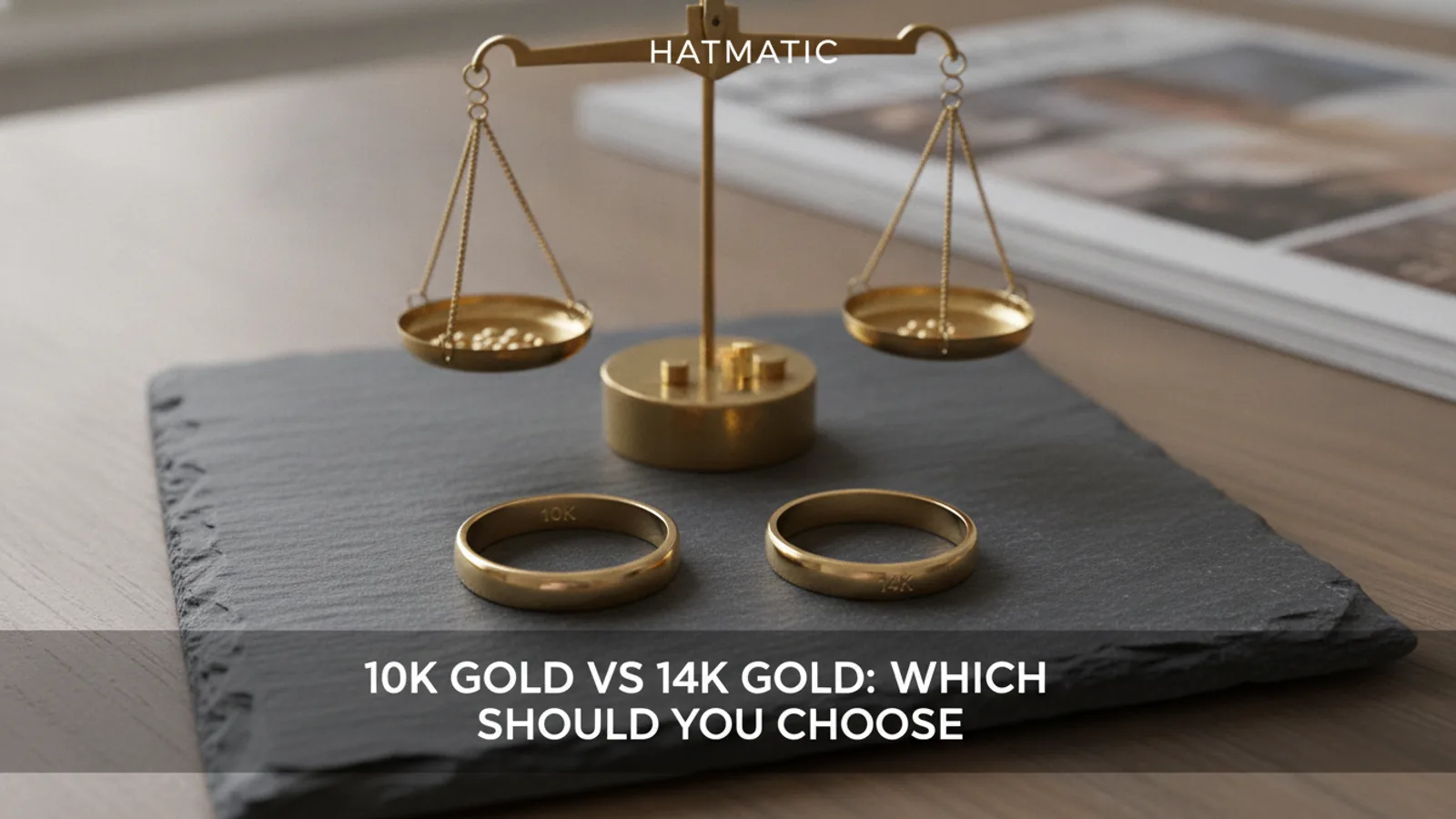
10k Gold vs 14k Gold: Which Should You Choose?
Head-to-head comparison
Overall winner: 14k Gold for its superior balance of colour, purity, and everyday durability.
For most people buying fine jewellery, 14k gold is the ideal choice. It offers a rich, classic gold colour and higher intrinsic value while being strong enough for daily wear. 10k gold is a fantastic, practical option for those on a tighter budget or who need maximum durability for an active lifestyle, though it comes at the cost of a paler colour and lower gold content.
This comparison is based on extensive research into the material properties of gold alloys, industry standards from leading jewellers, and an analysis of public buyer feedback patterns. We aim to provide a clear, evidence-led guide to help you choose the right gold for your needs and budget.
When choosing gold jewellery, the "karat" (k) number is one of the most important factors. It signifies the purity of the gold, measured in parts out of 24. Pure gold is 24k, but it's too soft for most jewellery. It's mixed with other metals, or alloys, to increase its strength. This guide compares 10k gold (41.7% pure gold) and 14k gold (58.3% pure gold), the two most popular options. While 14k gold is our overall winner for its balanced qualities, the superior durability and affordability of 10k gold make it the better choice for many specific situations.
Option A
10k Gold
- Best for: Active lifestyles & budget-conscious buyers
- Strength: Highest durability and scratch resistance
- Tradeoff: Paler colour and lower precious metal value
Option B
14k Gold
- Best for: Fine jewellery like engagement & wedding rings
- Strength: The ideal balance of rich colour and strength
- Tradeoff: Higher cost and slightly less durable than 10k
Head-to-Head Scorecard
10k Gold vs 14k Gold: Key Differences
While both are excellent choices for jewellery, the differences between 10k and 14k gold stem directly from their composition. Understanding these distinctions in purity, durability, colour, and price is crucial for making the right decision for your specific piece of jewellery.
Purity
The fundamental difference lies in the amount of pure gold each alloy contains. Karats are measured on a scale of 24, where 24k is 100% pure gold.
- 10k Gold: Composed of 10 parts pure gold and 14 parts other metals (alloys). This means it is 10/24, or 41.7% pure gold. The remaining 58.3% consists of metals like silver, copper, nickel, and zinc, which add strength.
- 14k Gold: Composed of 14 parts pure gold and 10 parts other metals. This makes it 14/24, or 58.3% pure gold. It has a significantly higher precious metal content than 10k gold.
This difference in purity directly influences every other factor, from its value and colour to its hardness and potential to cause skin irritation.
Durability
Perhaps counterintuitively, less pure gold is more durable. Pure 24k gold is extremely soft and malleable, easily bent or scratched. The other metals alloyed with gold are chosen for their strength and hardness.
- 10k Gold: With a higher percentage of strengthening alloys (58.3%), 10k gold is the most durable of the common gold alloys. It is harder and more resistant to scratches, dents, and bending. This makes it an exceptional choice for people with active lifestyles or for jewellery that will be subjected to frequent impact, like rings worn daily.
- 14k Gold: While still very durable and perfectly suitable for everyday wear, 14k gold is slightly softer than 10k gold. It will show scratches and wear a little more easily over time, but it offers more than enough strength for pieces like engagement rings, necklaces, and earrings.
Colour
The colour of gold jewellery comes from its pure gold content. The more pure gold an alloy contains, the richer and more saturated its yellow hue will be.
- 10k Gold: Due to its lower gold content, 10k gold has a paler, less intense yellow colour. It's a more subtle shade that some people prefer, but it doesn't have the classic, deep gold lustre of higher-karat alloys.
- 14k Gold: This is often considered the sweet spot for colour. Its 58.3% gold content provides a beautiful, warm, and rich yellow that is highly sought after in fine jewellery. The colour is noticeably more vibrant than that of 10k gold when viewed side-by-side.
Price and Value
The price of a piece of gold jewellery is primarily determined by its gold content. The more gold it contains, the more it will cost.
- 10k Gold: Containing less pure gold, 10k pieces are consistently more affordable than their 14k counterparts. This makes it an accessible entry point into the world of genuine gold jewellery.
- 14k Gold: The higher gold content means a higher price tag. However, it also means a higher intrinsic and resale value, making it a better long-term store of value.
Hypoallergenic Considerations
Allergies to gold itself are extremely rare. Skin reactions are typically caused by the alloy metals, most commonly nickel.
- 10k Gold: Its high alloy content (58.3%) means there is a greater chance it contains enough nickel to trigger a reaction in individuals with sensitive skin.
- 14k Gold: With a lower alloy content (41.7%), the risk of skin irritation is reduced. For this reason, 14k gold is generally considered the better choice for those with known metal allergies.
Measurement Winners for 10k gold vs 14k gold
We evaluated both gold types across five key criteria that matter most to buyers: routine fit, formula (purity/colour), ease of use (hypoallergenic qualities), value, and overall buyer confidence.
Measurement
Routine Fit (Durability)
For jewellery, "routine fit" refers to how well the material stands up to the demands of daily life. The primary factor here is durability—resistance to scratches, dents, and bending. Pure gold is very soft, so hardness is determined by the percentage and type of metal alloys mixed in.
10k gold contains 58.3% alloy metals, compared to 41.7% in 14k gold. This higher concentration of harder metals like nickel and zinc makes 10k gold significantly more robust. It is less likely to get scratched during everyday activities and better resists warping or denting from accidental impacts. This makes it the superior choice for rings worn by people who work with their hands, are very active, or are simply tough on their jewellery. While 14k gold is certainly durable enough for most people, 10k gold offers a clear advantage in pure toughness.
Measurement
Formula or Feature (Purity & Colour)
The core "feature" of gold is its iconic colour and precious nature, both of which are a direct result of its purity. This category assesses which alloy best delivers the quintessential gold experience that buyers seek.
With 58.3% pure gold, 14k gold has a distinct advantage. This higher gold content gives it a richer, warmer, and more saturated yellow hue that is visibly superior to the paler shade of 10k gold. It's the classic, luxurious colour most people picture when they think of gold jewellery. This aesthetic superiority, combined with its higher intrinsic value, makes 14k gold the winner. While 10k gold is still beautiful, 14k gold simply looks more like the precious metal it is.
Measurement
Ease of Use (Hypoallergenic Quality)
A crucial aspect of "ease of use" for wearable items is how they interact with your body. For jewellery, this often comes down to whether it can cause skin irritation or allergic reactions. Most gold allergies are actually reactions to the alloy metals mixed in, particularly nickel.
Because 14k gold contains a lower percentage of alloy metals (41.7% vs. 58.3% in 10k gold), the probability of it containing enough nickel to cause a reaction is lower. People with sensitive skin or known metal allergies are less likely to have issues with 14k gold. It is widely recommended by jewellers as a safer, more biocompatible option for pieces worn in constant skin contact, such as wedding bands or earrings. This makes it easier and more comfortable for a wider range of people to wear without worry.
Measurement
Value (Price & Affordability)
Value can be defined in two ways: initial affordability and long-term worth. For this measurement, we focus on the upfront cost and accessibility for the buyer. Which option provides the look of genuine gold for a lower initial investment?
The answer here is unequivocally 10k gold. The price of gold jewellery is driven primarily by its "melt value"—the market price of its pure gold content. Since a 10k gold piece contains significantly less pure gold than an identical 14k piece, its price will always be lower. This makes 10k gold an excellent value proposition, allowing buyers on a stricter budget to purchase genuine gold jewellery without the higher expense of 14k. It democratises access to fine jewellery, offering durability and the prestige of gold at a much more attainable price point.
Measurement
Buyer Confidence (Resale & Industry Standard)
Buyer confidence is about making a purchase that is widely recognised, accepted, and holds its value over time. It reflects the market consensus and the long-term viability of your choice.
In the UK, US, and many other Western markets, 14k gold is the undisputed industry standard for fine jewellery. It represents over 90% of gold engagement and wedding ring sales. This widespread popularity means it has excellent brand recognition, is available in a vast array of styles, and is trusted by consumers and jewellers alike. Furthermore, its higher gold content gives it a better resale value compared to 10k gold. Choosing 14k gold is a safe, reliable, and future-proof decision that aligns with market expectations for quality fine jewellery.
Choose 10k Gold If...
- Durability is your top priority. If you have an active job, work with your hands, or are simply prone to being rough on your jewellery, the superior hardness of 10k gold will serve you well.
- You are on a strict budget. 10k gold offers the experience of owning real gold jewellery at the most accessible price point.
- You are buying for a child or teenager. Its combination of affordability and durability makes it an ideal choice for a first piece of fine jewellery that can withstand a more active, less careful lifestyle.
- You prefer a subtler, paler gold hue. Some people favour the less intense yellow of 10k gold over the richer tone of 14k.
- You have no known metal allergies. If you don't have sensitive skin, the higher alloy content in 10k gold is unlikely to be an issue.
Choose 14k Gold If...
- You are buying an engagement ring, wedding band, or other significant piece. 14k gold is the industry standard for these important purchases for a reason.
- You want a rich, classic gold colour. The vibrant, warm yellow of 14k gold is what most people desire when they invest in gold jewellery.
- You have sensitive skin or metal allergies. The lower alloy content makes 14k gold a safer choice to avoid potential skin irritation.
- You want the best balance of qualities. 14k gold is the perfect compromise, offering beautiful colour and good value while still being strong enough for everyday wear.
- Resale value is a consideration. The higher pure gold content means your piece will be worth more over the long term.
Choose 10k Gold If
- You want the stronger default fit after checking the current evidence.
- You care about broader usefulness across the main comparison criteria.
- You prefer the option with clearer decision support for most readers.
Choose 14k Gold If
- Your situation matches 14k Gold's narrower strength more closely.
- You prefer a simpler starting point with fewer tradeoffs to manage.
- You have verified the current details and they fit your specific priority.
Final Verdict: 10k Gold vs 14k Gold
After a thorough comparison, 14k gold emerges as the overall winner. It represents the ideal intersection of beauty, value, and durability that most buyers seek in fine jewellery. Its rich, warm colour is the industry benchmark, its purity gives it significant intrinsic value, and it possesses more than enough strength to be worn and enjoyed every day. For milestone pieces like engagement rings, wedding bands, and treasured gifts, 14k gold is the most confident and satisfying choice.
However, this does not diminish the excellent case for 10k gold. For shoppers whose primary concerns are maximum durability and affordability, 10k gold is the smarter option. Its hardness is unmatched, making it perfect for individuals with highly active or manual lifestyles. Its lower price point makes genuine gold accessible to a much wider audience. It is a practical, intelligent choice that delivers on its promise of toughness and value.
Ultimately, the right choice is personal. If your heart is set on that classic, radiant gold lustre and you value a balance of features, choose 14k gold. If your head prioritises budget and the ability to withstand absolutely anything, choose 10k gold. Both are "real" gold, and both can be crafted into beautiful, lasting pieces of jewellery.
10k Gold vs 14k Gold: Which Should You Choose? FAQ
What does 'k' in 10k or 14k gold mean?
The 'k' stands for karat, which is the unit used to measure the purity of gold. The system is based on a total of 24 parts. So, 24k gold is 100% pure gold. 14k gold is 14 parts pure gold and 10 parts other metals (14/24 = 58.3% pure), while 10k gold is 10 parts pure gold and 14 parts other metals (10/24 = 41.7% pure).
Is 10k gold "real" gold?
Yes, absolutely. Any gold jewellery with a karat stamp of 10k or higher is considered real gold. 10k gold is an alloy containing 41.7% pure gold, which is a substantial amount. In the United Kingdom, 9k is the lowest legal standard to be called "gold," so 10k is well above that threshold.
Does 10k gold tarnish or turn your skin green?
10k gold can tarnish over time more readily than 14k gold because it has a higher percentage of alloy metals like copper and silver, which can react with oxygen and sulphur in the air. Similarly, the reaction between these metals and the acids on your skin can, in rare cases, cause a harmless green or black discolouration. However, this is uncommon and can be easily cleaned. Proper care and regular cleaning will prevent significant tarnishing.
Which is better for an engagement ring, 10k or 14k gold?
For an engagement ring, 14k gold is almost always the recommended choice. It offers the best combination of rich colour, perceived value, and hypoallergenic properties, which are all important for such a significant piece of jewellery. While 10k is more durable, 14k gold is sufficiently strong for daily wear and its aesthetic superiority makes it the industry standard for bridal jewellery.
How can I tell the difference between 10k and 14k gold?
The most reliable way is to look for the hallmark, a small stamp on the inside of the ring or on the clasp. It will be marked "10k," "417" (for 41.7% gold), "14k," or "585" (for 58.5% gold, a common European standard for 14k). Visually, if you hold the two side-by-side, 14k gold will have a noticeably richer, more saturated yellow colour, while 10k gold will appear paler.
Is 10k gold worth buying?
Yes, 10k gold is definitely worth buying for the right person and purpose. If you're looking for an affordable and highly durable piece of genuine gold jewellery that can withstand an active lifestyle, 10k gold provides excellent value for money. It's a practical and sensible choice for everyday pieces.